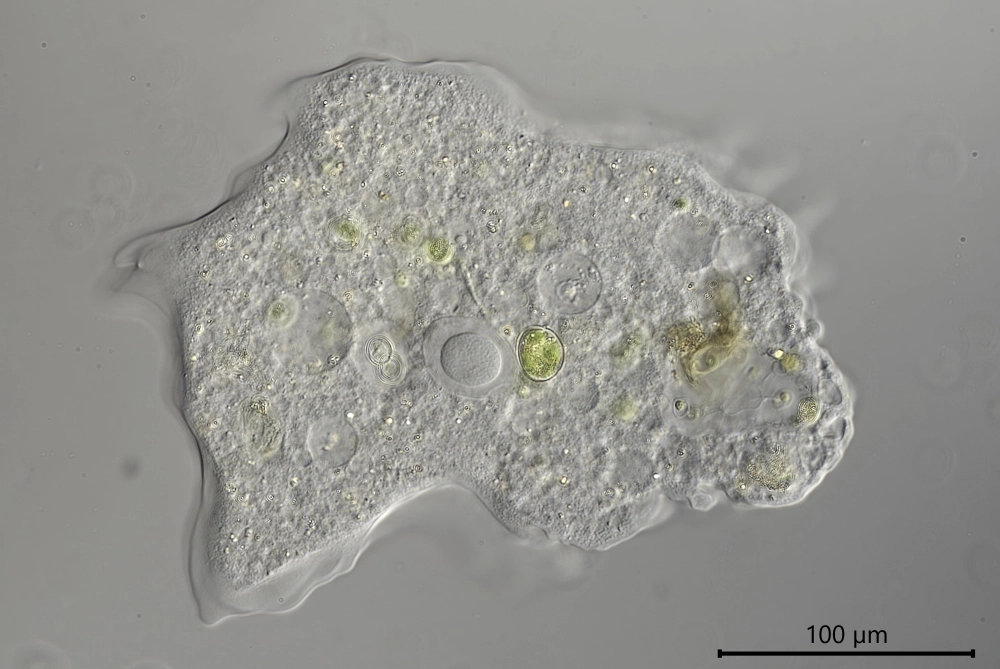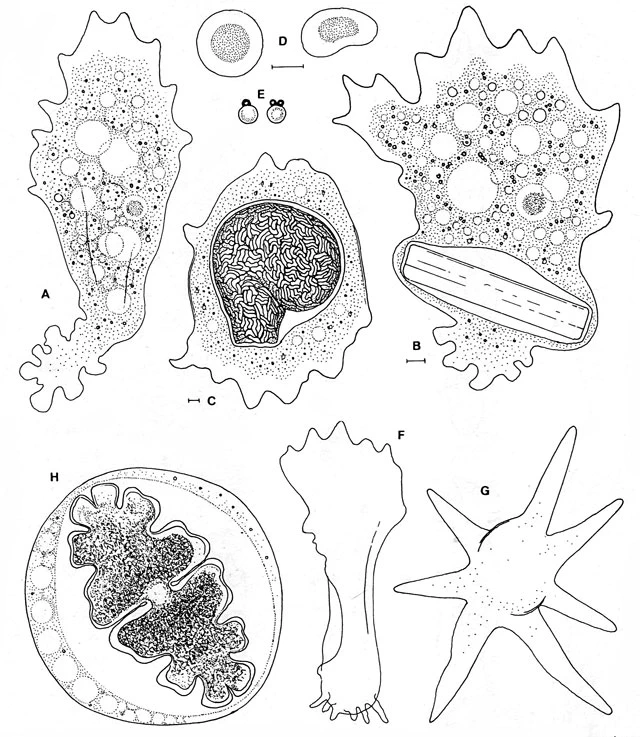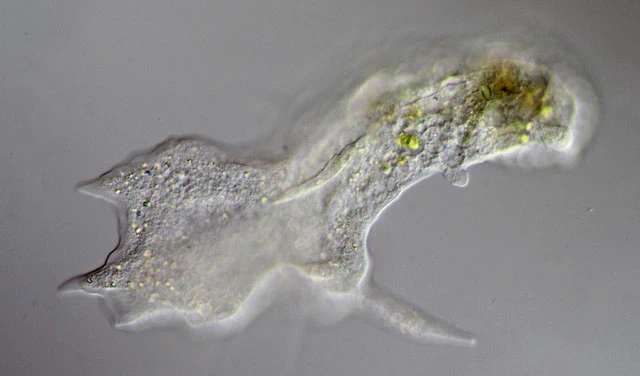
Mayorella augusta Schaeffer, 1926
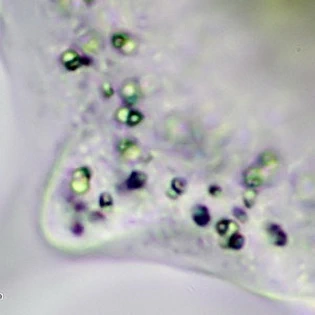
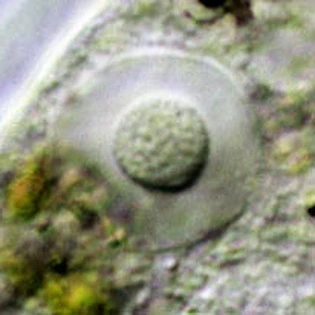
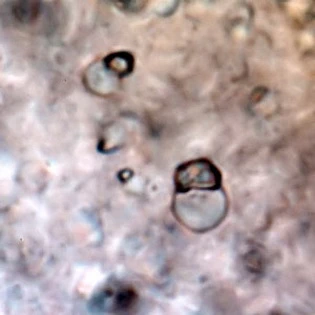
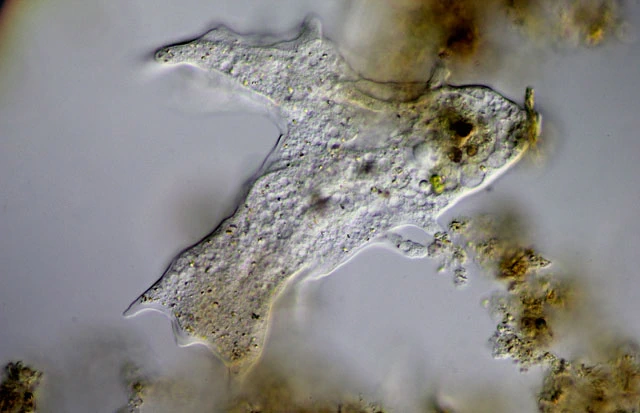
Diagnosis: Locomotive form triangular, with parallel dorsal folds; body narrow, the anterior end sometimes divided into two branches, forming a Y‑shape; subpseudopodia usually present; nucleus spherical with a somewhat granular central nucleolus; cytoplasmic crystals irregular or attached to spherical bodies; numerous vacuoles; floating form more or less symmetrical, with several tapering pseudopodia.
Dimensions: Schaeffer: 250—350 µm; nucleus 18 µm (n = 1).
My measurements: 200—320 µm; nucleus 19.0—40.1 µm; crystals up to 4 µm.
Ecology: Freshwater, typically in Sphagnum bogs. The amoeba feeds on both algae and protists. It is capable of capturing and digesting large prey such as Difflugia tuberculata, Lesquereusia spiralis, and Euastrum oblongum. It can survive for months in stored samples.
Remarks: Schaeffer’s description is based on a single specimen.
Reference: Schaeffer, A. A. (1926). Taxonomy of the amoebas. Papers of the Department of Marine Biology, Carnegie Institution of Washington, 24: 1–116.