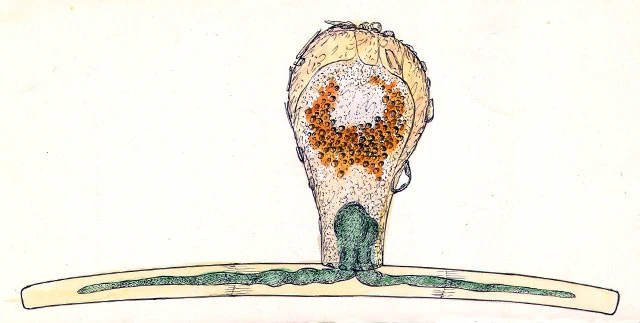
P. rubescens feeding on Closterium (Drawing A.A. de Groot, collection Ferry Siemensma)
Pseudonebela rubescens (Penard, 1891) new comb.
Basionym: Difflugia rubescens Penard, 1891
Synonym: Pseudopontigulasia gessneri Van Oye, 1956
? Synonym: Pseudonebela africana Gauthier-Lièvre, 1953
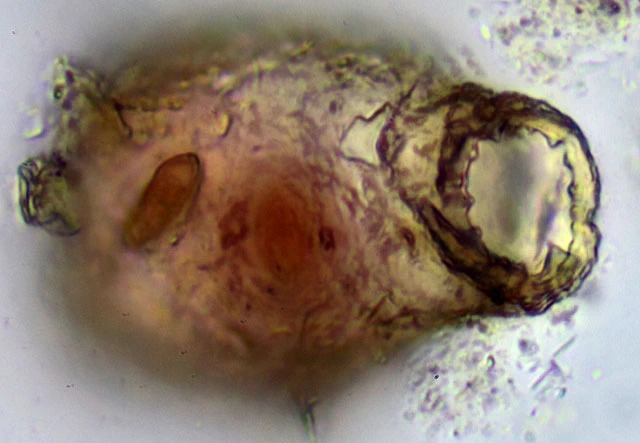
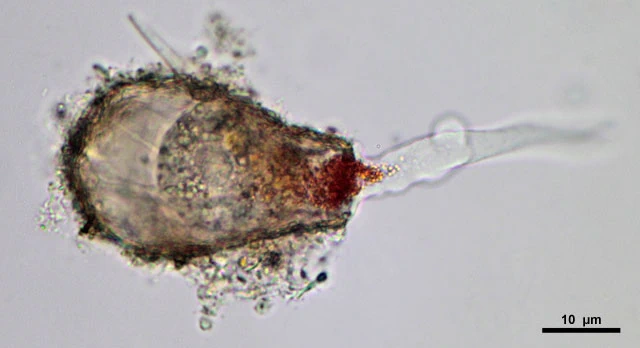
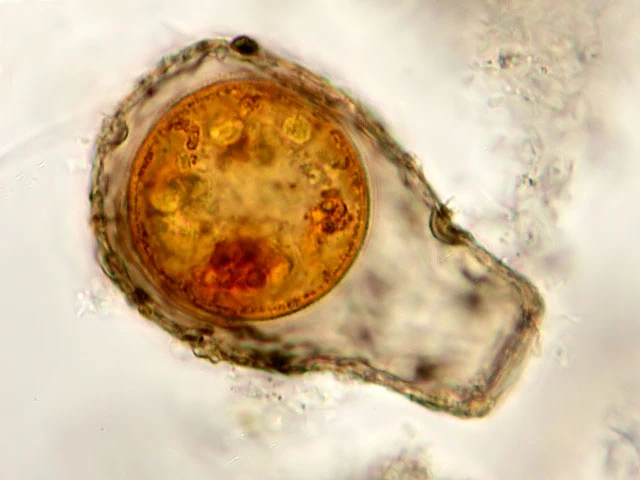
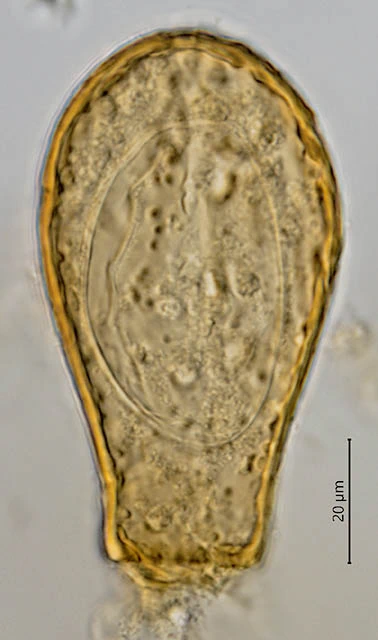
Diagnosis: Shell pyriform, yellow to light brown in color; membrane chitinous and encrusted with foreign particles and diatoms. Aperture circular, bordered by an incurved, crenulate margin. Protoplasm usually contains numerous brick-red granules; cyst equally red or brownish-red.
Dimensions (literature): length 65—105 µm; shell breadth 38—54 µm; aperture diameter 14—20 µm.
Ecology: Aquatic vegetation and among Sphagnum or mosses.
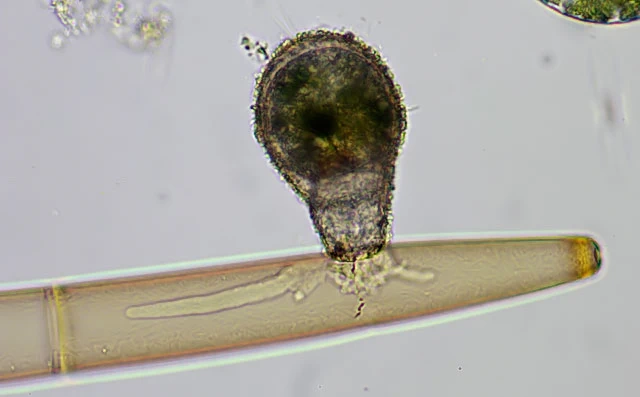
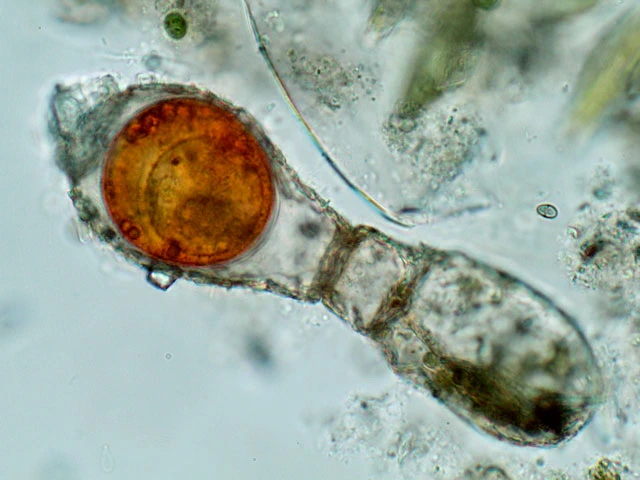
Remarks: P. rubescens perforates filamentous algae and ingests their contents. This species belongs to the genus Pseudonebela (see Siemensma and Opitz, 2014). Pseudopontigulasia gessneri Van Oye, 1956 is undoubtedly a member of Pseudonebela, whereas P. africana may be conspecific with P. rubescens.
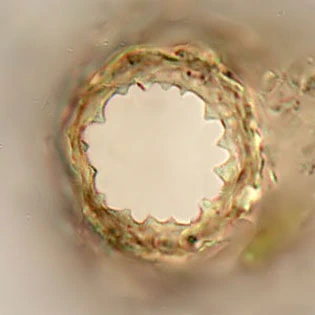
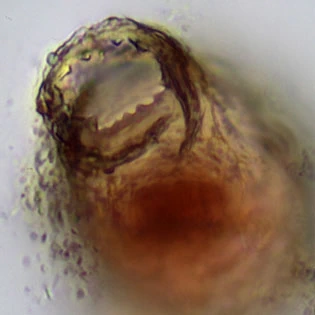
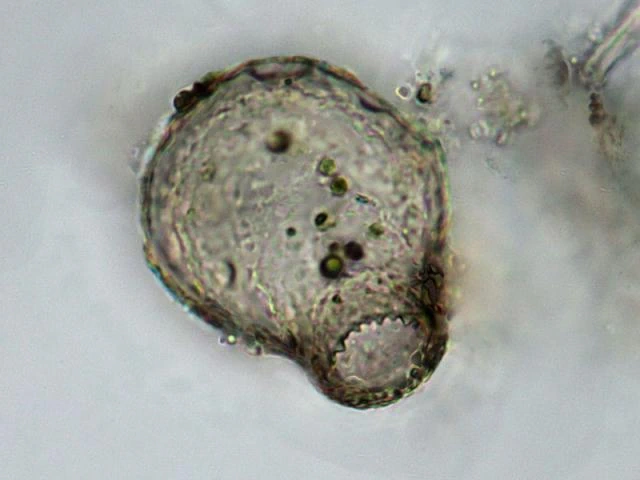
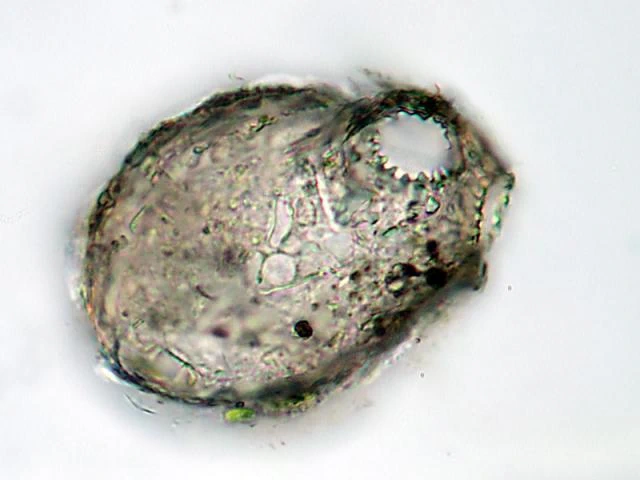
P. rubescens, pseudostome, Austria (l) and Netherlands (r)
P. rubescens, pseudostome, Cardet, France, 2019
Pseudostome, Dutch specimen (l), other test from Cardet, France 2019 (r)
P. rubescens, two specimens exchanging cytoplasm (likely gamontic conjugation / DNA exchange). The identical coloration of both shells indicates two mature individuals rather than a cell division, as daughter shells during division are initial and colorless. (Sphagnum, Ire, Southern Sweden, 2026).
P. rubescens, a specimen from the same sample as the two in the photomicrograph above, but almost twice the size (Sphagnum, Ire, Southern Sweden, 2026).
P. rubescens, 83 µm, the Netherlands
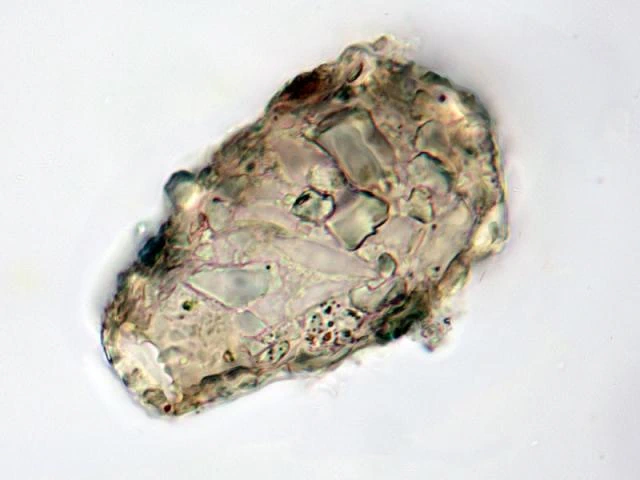
P. rubescens, stacked image – Tirol, Austria
P. rubescens, feeding on a Closterium – The Netherlands
P. rubescens – The Netherlands
P. rubescens – 70m long, with cyst; Austria, Tirol
P. rubescens with double pseudostome
P. rubescens, 75 µm; Tirol, Austria
P. rubescens, total length 154 µm – Tirol, Austria
P. rubescens, Haaksbergen, Netherlands 2018