Nebela carinata (Archer) Leidy, 1879
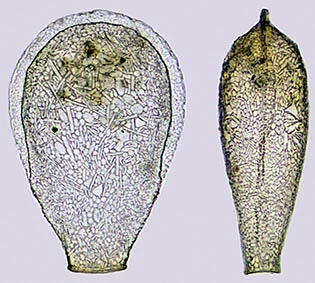
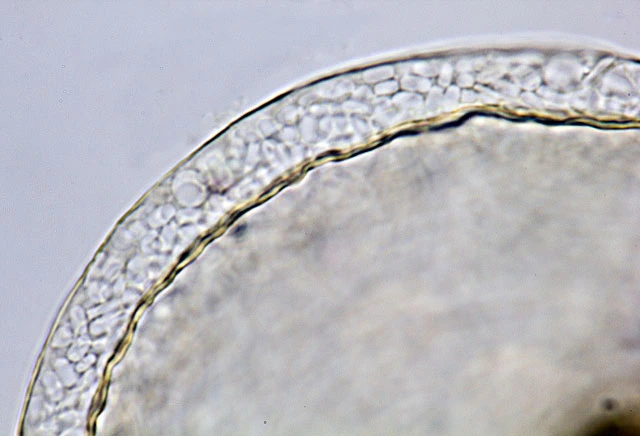
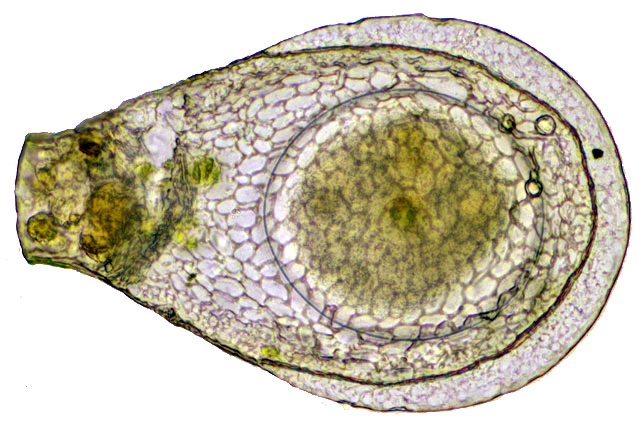
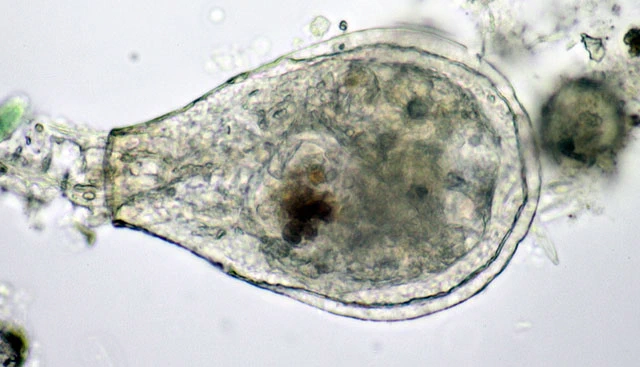
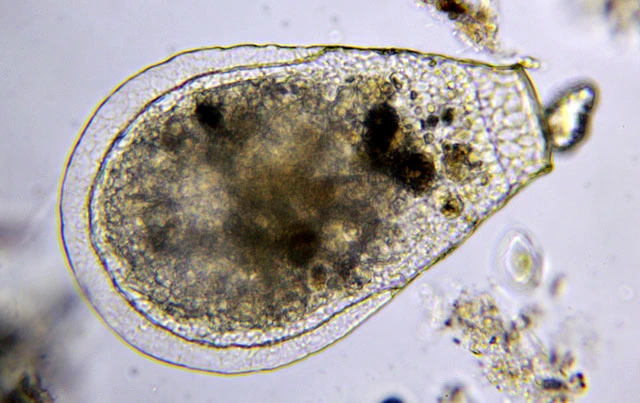
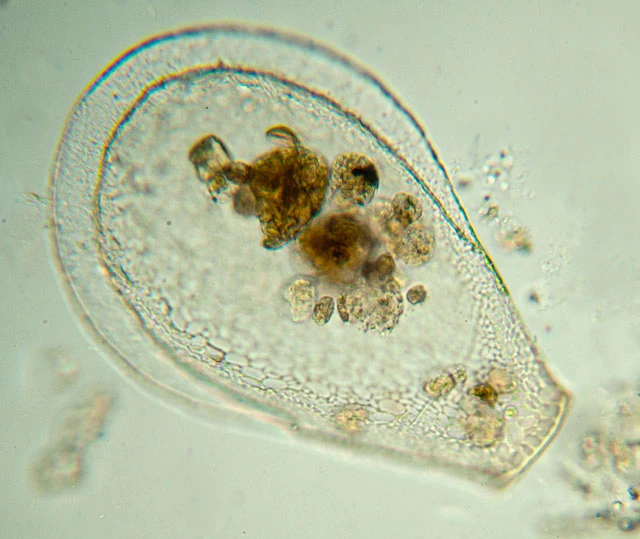
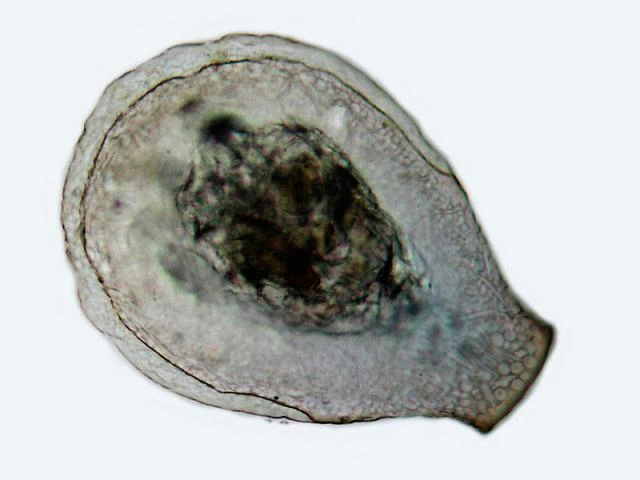
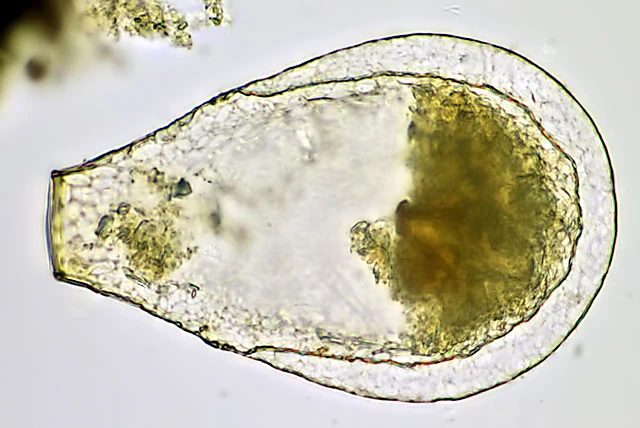
Diagnosis: shell colorless, oval or pyriform, with a thin but broad lateral keel or ridge that begins just posterior to the aperture, laterally compressed with a small lateral pore present on each side; shell composed of mainly oval or circular shell plates, often interspersed with small beads of organic cement; aperture oval and surrounded by a thin collar of organic cement.
Dimensions: shell 155-202 µm long, my measurements 177-223 µm long.
Ecology: Sphagnum vegetation
Remarks: Kosakyan et al, 2012 found that, based on their molecular data, what they considered to be N. carinata could be separated into two clear-cut, robustly supported groups. The important genetic distance between the two groups (14% divergence in nucleotide sequences) suggests that these two forms should be considered as separate species. Further investigation will clarify whether there exist slight morphological differences between these two forms (pseudocryptic diversity) or if no external morphological features can discriminate them (true cryptic diversity) and if the two clades differ with respect to ecology.This species is large (above 120 µm) and is restricted to wet microsites in Sphagnum dominated ecosystems.
This species has a characteristic thin but broad keel, but as Cash et al., (1909) noted, the degree of development of this feature is not constant and they suggested that this probably indicated a wide range of variability. Therefore Nebela carinata specimens are sometimes hard to distinguish from those of Nebela marginata. I find both species often together.