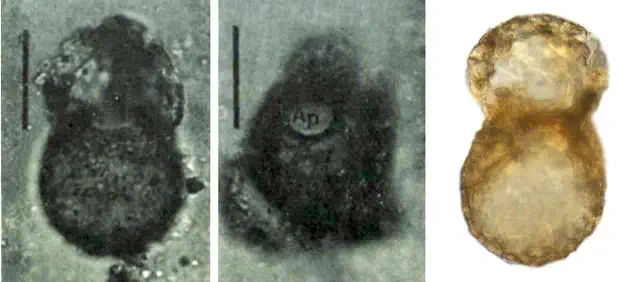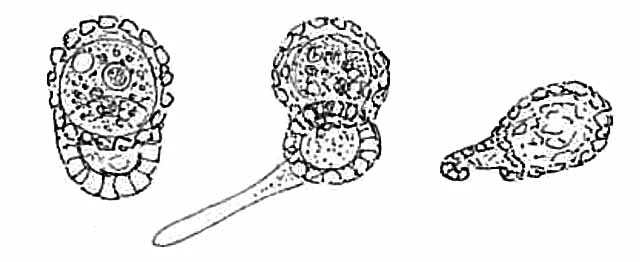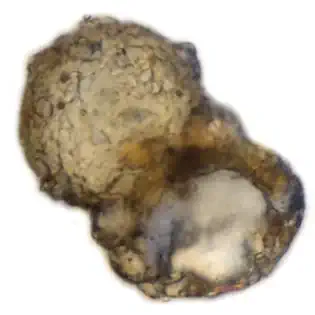
Genus Conicocassis Nasser and Anderson, 2015
Diagnosis: Shell formed of two distinct parts: a spherical or sub-spherical main body (chamber) and a large semi-circular conical or funnel-like visor. The chamber has a small circular aperture. The shell wall is composed of an organic matrix, incorporating fine plate-like polymorphous mineral particles. The visor which expands fan-like above and around the aperture, is mostly embossed with more voluminous quartz particles, in particular at the rim. Seen from an apertural view, this visor is as large as the shell body. The attachment area of the apertural flange to the main body produces a pronounced constriction in the shell wall that is particularly diagnostic.
Type species. Conicocassis pontigulasiformis (Beyens & Chardez, 1986)
Ecology: Freshwater, wet moss.
References: Nasser, N.A., Patterson, T. (2015). Conicocassis, a new genus of Arcellinina (testate lobose amoebae). Palaeontologia Electronica 18.3.46A: 1-11.
palaeo-electronica.org/content/2015/1323-new-genus-of-arcellinia.