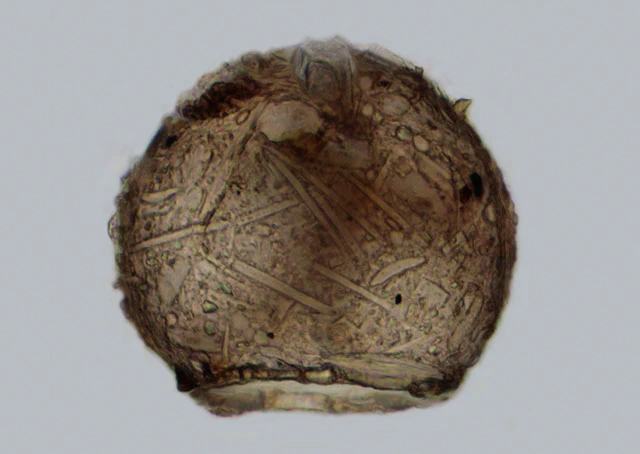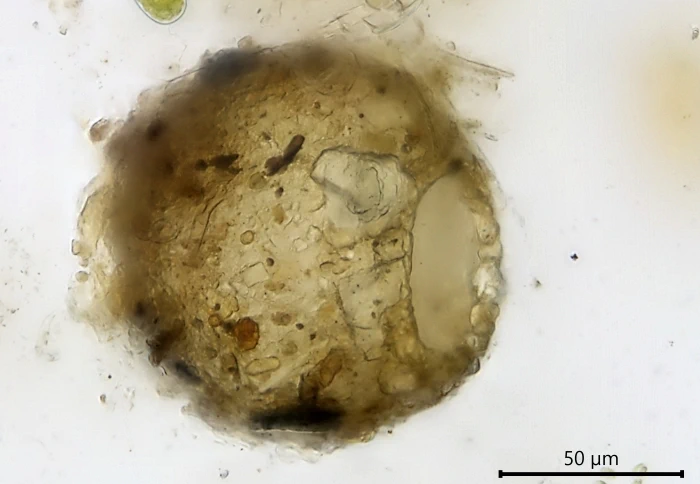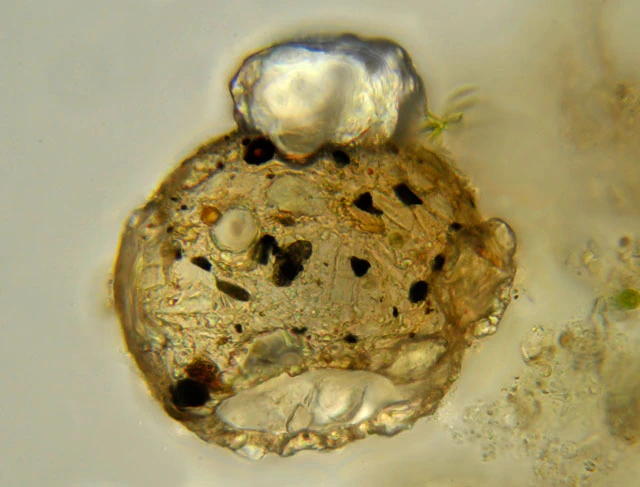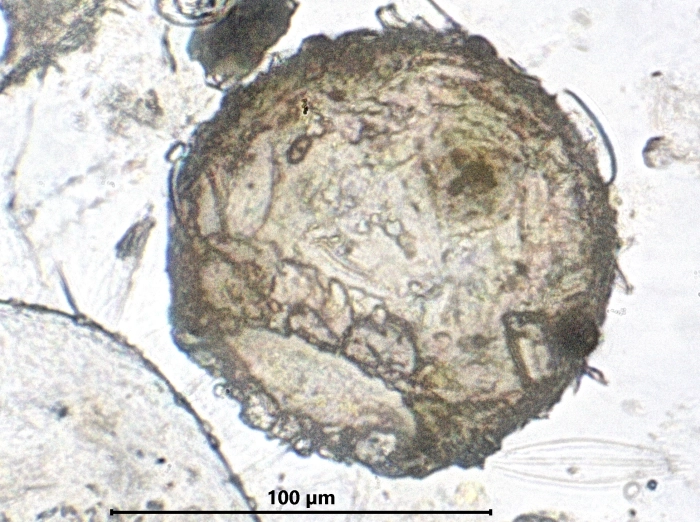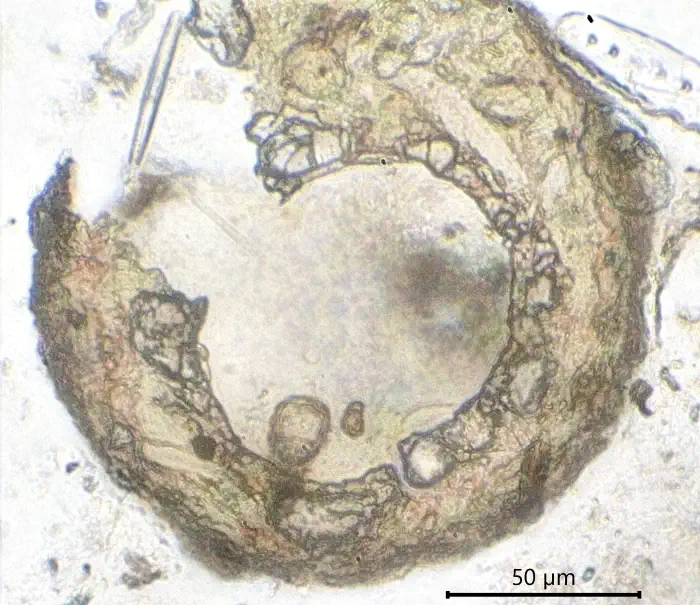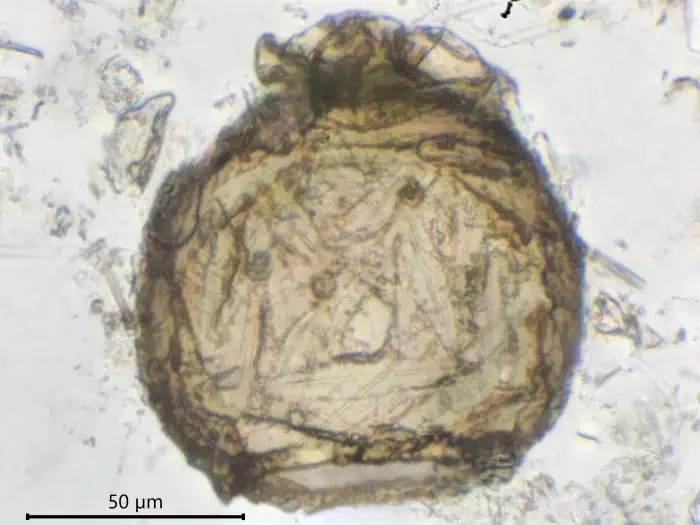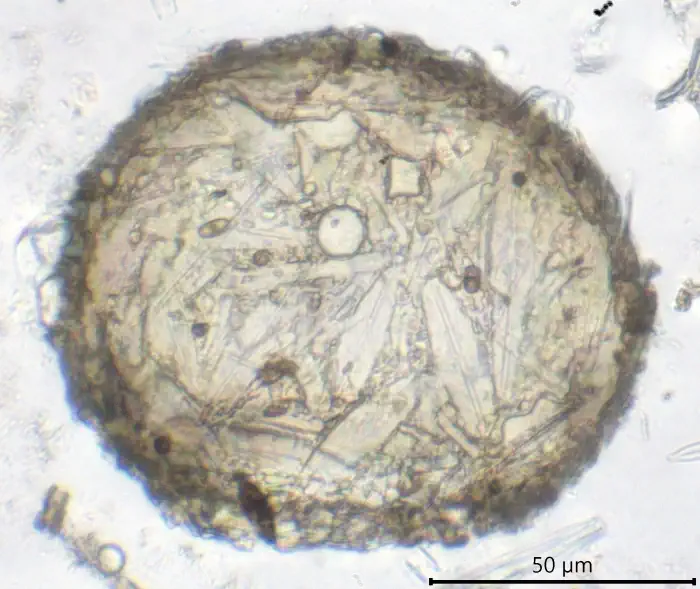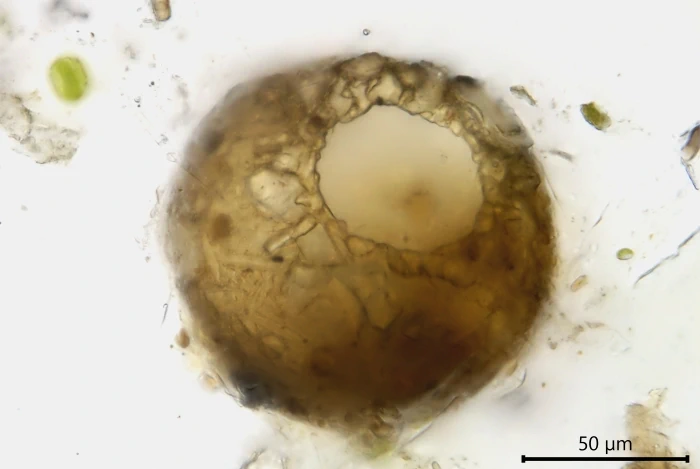
Difflugia globulosa (Dujardin, 1837) Penard, 1902
Diagnosis: Shell brown, spherical or hemispherical, usually composed of large quartz particles, but may also include diatom frustules; overall appearance rough, although smoother forms have been observed; aperture circular, surrounded by smaller particles that often appear smooth due to overlying cement; variation within this species is considerable, both in shell composition and in the size of the aperture relative to the shell diameter.
Dimensions: Literature: shell diameter 91–155 µm (Dujardin: 100–250 µm; see Remarks below).
Ecology: Freshwater; peat bogs, among wet Sphagnum; oligotrophic ponds.
Geographical distribution: Europe.
Remarks: Shells of this species may be confused with those of Phryganella nidulus, which are more flattened. Penard (1902) described two distinct forms: the typical form and one ranging between 135 and 155 µm. He also described two smaller forms measuring 50–70 µm. Cash et al. (1909) described a small form (15–50 µm) under the name D. globulus and suggested that Dujardin’s original description of D. globulosa was ambiguous. Dujardin described the species as spherical or ovoid, 100–250 µm in size. He likely observed at least two different species.