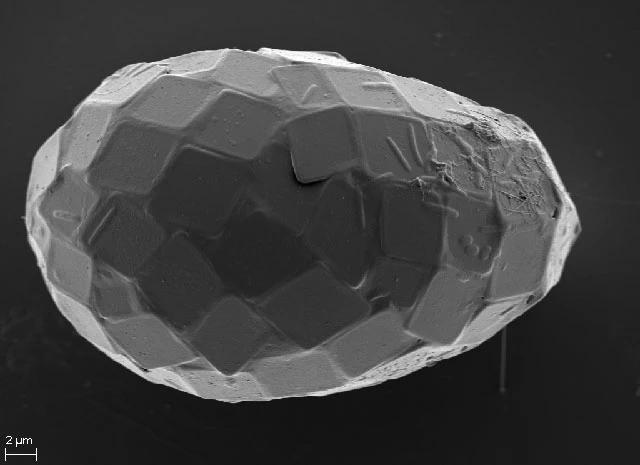
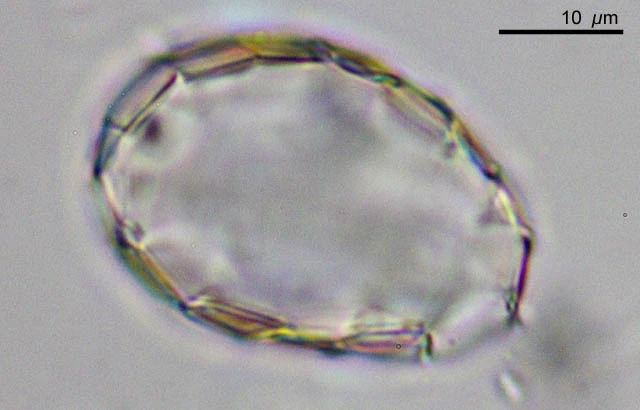
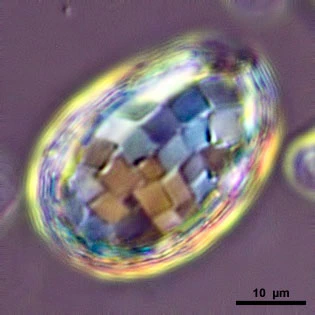
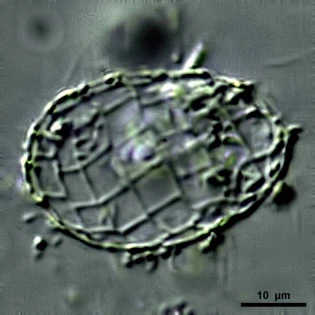
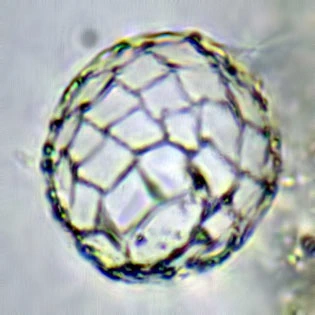
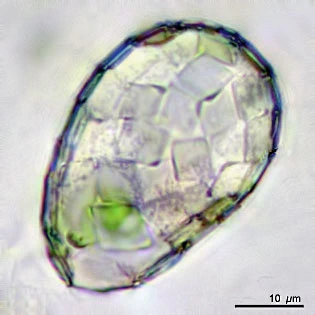
Microquadrula spec.
Diagnosis: Shell ovoid, hyaline and transparent, covered with square or rectangular calcareous plates, embedded in a chitinous and colorless membrane. Plates, juxtaposed or covering each other partially, are arranged in vertical or more or less oblique series. Plates are arranged in 4-8 transverse rows. Pseudostome circular, obliquely truncated. Nucleus and pseudopods not observed.
Dimensions: length 37-45 µm long and diameter 23 µm./>
Remarks: I found ample empty shells in a sample brought to me from Wellington, Florida (GPS 26.66669 -80.23204) by Sandra Redeker (2014). The sample came from aquatic plants in a shallow pond. These shells resembled those as described for Microquadrula musciphila, but without the small plates around the pseudostome. A main distinction between Lamtoquadrula and Microquadrula is that the plates of the latter genus easily dissolve in hydrochloric acid, which indicates that the plates aren’t siliceous, but are made of calcite.