Arcella spectabilis Deflandre, 1928 *)
Basionym: Arcella mitrata var. spectabilis Deflandre, 1928
Syn.: Arcella mitrata pars Leidy, 1876
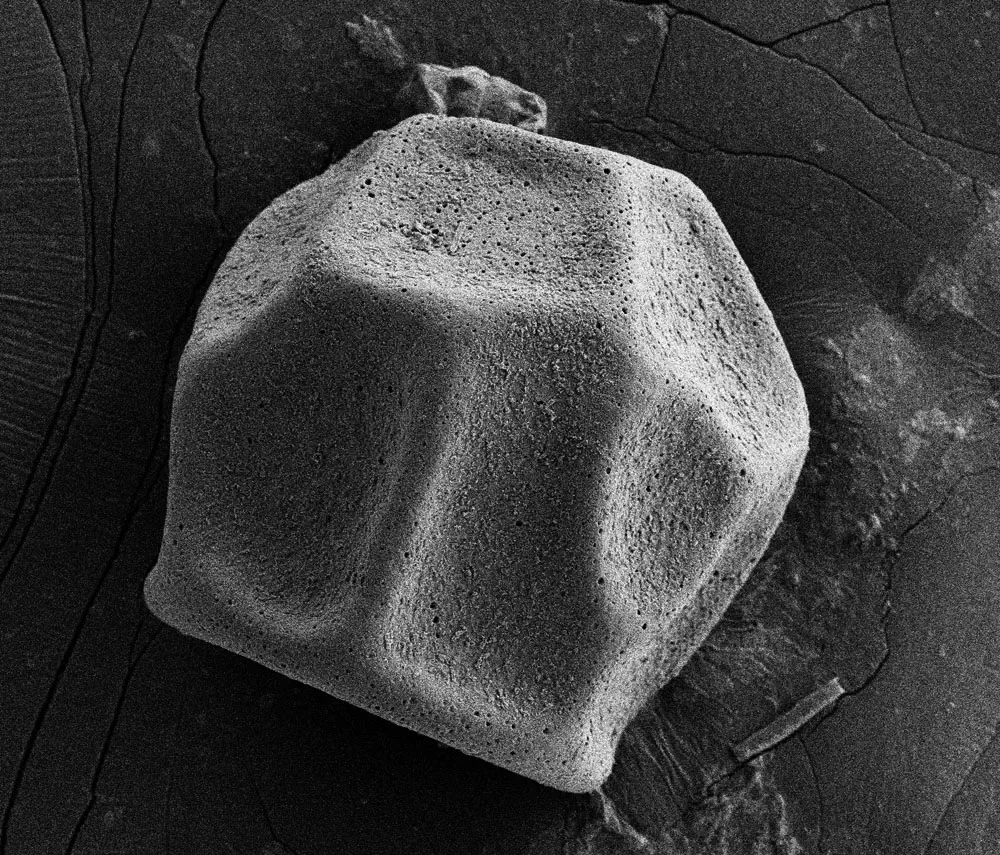
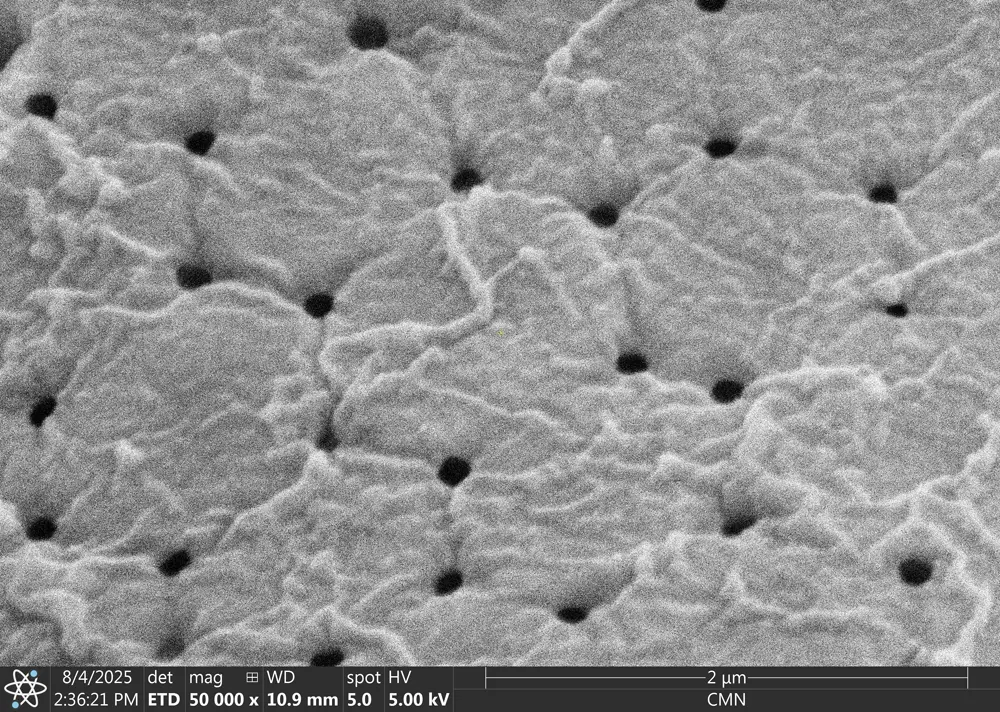
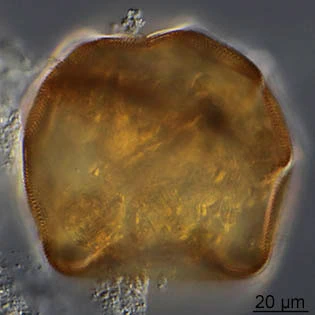
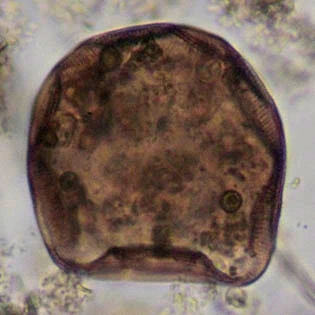
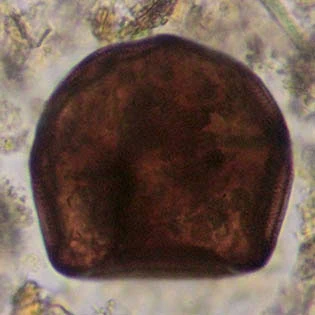
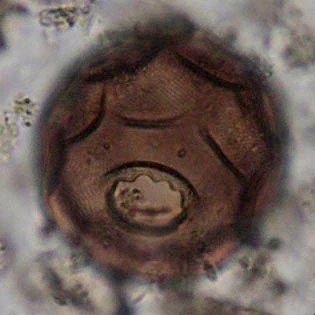
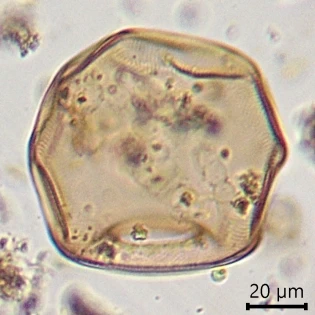
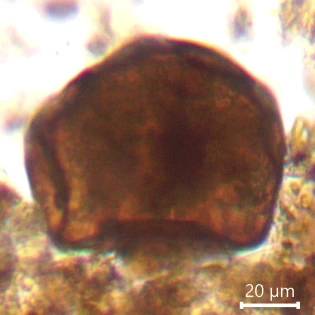
Diagnosis: Shell usually slightly wider than high; surface with regularly arranged dimples, variable in number. In dorsal view the shell shows a polygonal outline with slightly rounded corners and more or less concave sides. Aperture with a crenulated margin and a concentric ring caused by the buccal tube. In lateral view, the dorsal surface displays dimples in several configurations: either a single basal row plus an apical pyramid (truncated or not), or two superimposed basal rows plus an apical pyramid. The apertural side is deeply invaginated and bears a long buccal tube.
Dimensions: According to Leidy (1879, ex icon.): shell diameter 86–91 µm; height 80–90 µm; diameter of apertural side 65–74 µm; apertural diameter 25–29 µm; height of apertural tube 15–21 µm.
My measurements: shell height 85–91 µm; diameter 91–98 µm.
Ecology: Freshwater; in wet Sphagnum. Rare.
Geographical distribution: North America (USA, Leidy, 1879; Canada, Taylor, unpubl.), the Netherlands (Siemensma, 2017, 2019)
Remarks: I first found this species in 2017 in a peat bog (Diepveen, the Netherlands), where A. mitrata also occurred but was distinctly larger (120–130 µm). Based on Deflandre’s (1928) description and my own observations, I consider A. mitrata var. spectabilis to represent a separate species. In 2019 and 2025 I encountered the species again in two additional peat bogs—Ganzenpoel and Davidsplassen—both located near the Diepveen, in the northern Netherlands.
The status of A. spectabilis as a distinct species was confirmed in 2025 by molecular research conducted by Bruce Taylor (unpubl.).
*) ICZN Note
No new name needs to be established in this case under the International Code of Zoological Nomenclature. Because the name was published before 1961 using the abbreviation var., it is deemed subspecific under Article 45.6.4, unless explicitly proposed as infrasubspecific. As a species-group name, it is simultaneously established at both species and subspecies rank under the Principle of Coordination (Art. 46.1), with the same author, date, and name-bearing type. Accordingly, when treated at species rank, the correct name is Arcella spectabilis Deflandre, 1928.