Pseudopodia
A pseudopodium or pseudopod (plural: pseudopodia or pseudopods) is a temporary cytoplasmic extension of an amoeboid cell, used for locomotion and ingestion of food. The name means literally ‘false foot’. Pseudopodia are powered by microfilaments near the cellular membrane. About half of the internal space of an amoeba contains microfilaments. A pseudopodium contains both granuloplasm and hyaloplasm. Pseudopodia which only contain hyaloplasm are called subpseudopodia.

Amoeba proteus, arrows indicate four of the numerous pseudopodia.
Form and structure of the pseudopodia are important taxonomical characters. Depending upon their shape, several types of pseudopodia are distinguished, e.g.:


Lobopodia. more or less finger-like pseudopodia; most common type of pseudopodia. Lobose amoebae are by far the largest group. Right: subpseudopodia.


Filopodia. thin, slender and threadlike pseudopodia. These filopodia can branch or anastomose, depending upon taxa. They are typical for Rhizaria.


Reticulopodia. pseudopodia which anastomose (=make contact with another pseudopodium), thus forming a network (reticulum); not necessarily with granules.


Granulopodia. filopodia with a granular structure. The granules are called extrusomes and play a role in capturing prey. These granulopodia can also branch and sometimes anastomose.


Granuloreticulopodia: granulated anastomosing and branching filopodia, forming pseudopodial networks; with fast bidirectional streaming of granules (known from Foraminifera) or two-way streaming of granules (e.g. Trivalvularidae).


Axopodia. filopodia supported by regular arrays of microtubules. Amoeboids with axopodia are Radiolaria and Heliozoa.
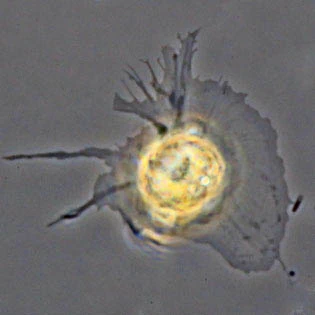

Lamellipodium. broad very thin veil-like pseudopodium; most often amoebae use a combination of filopodia and lamellipodia.