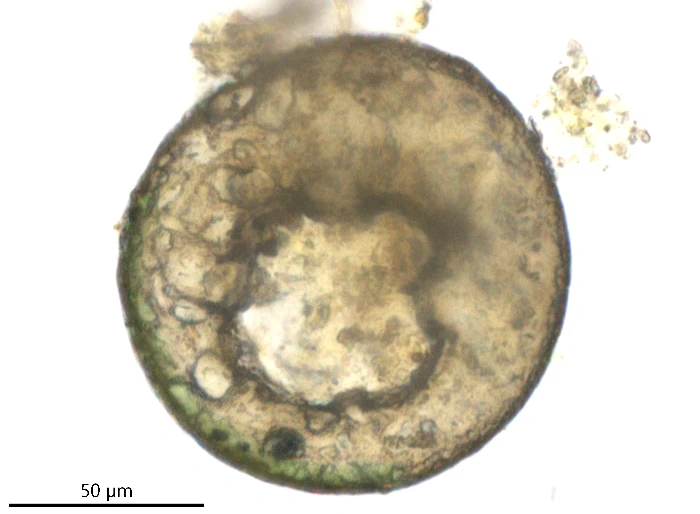
Centropyxis lapponica Grospietsch, 1954
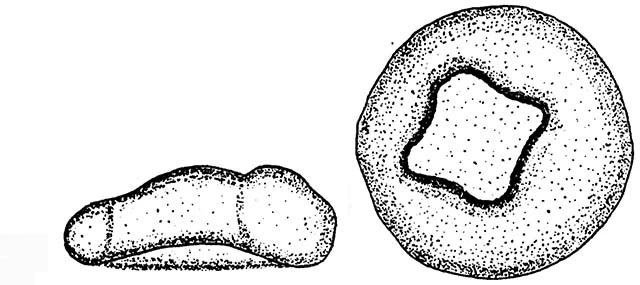
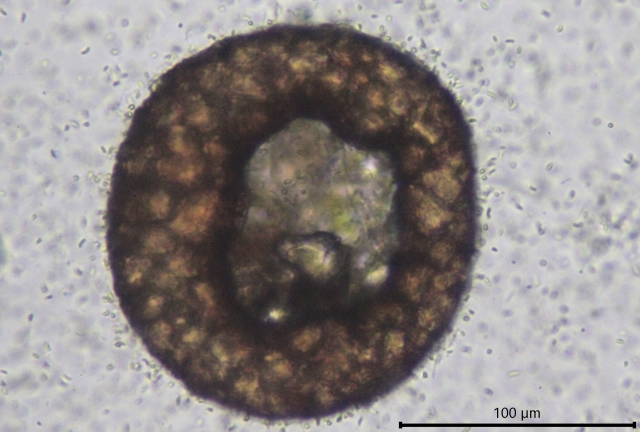
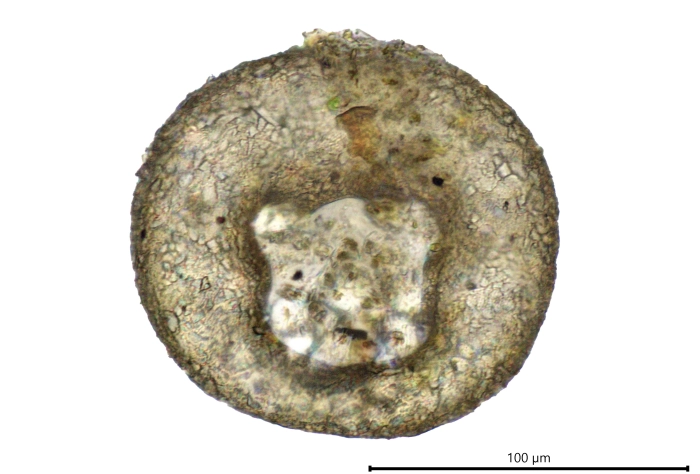
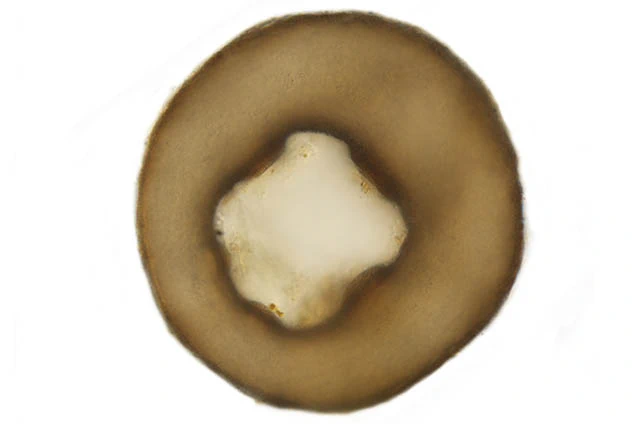
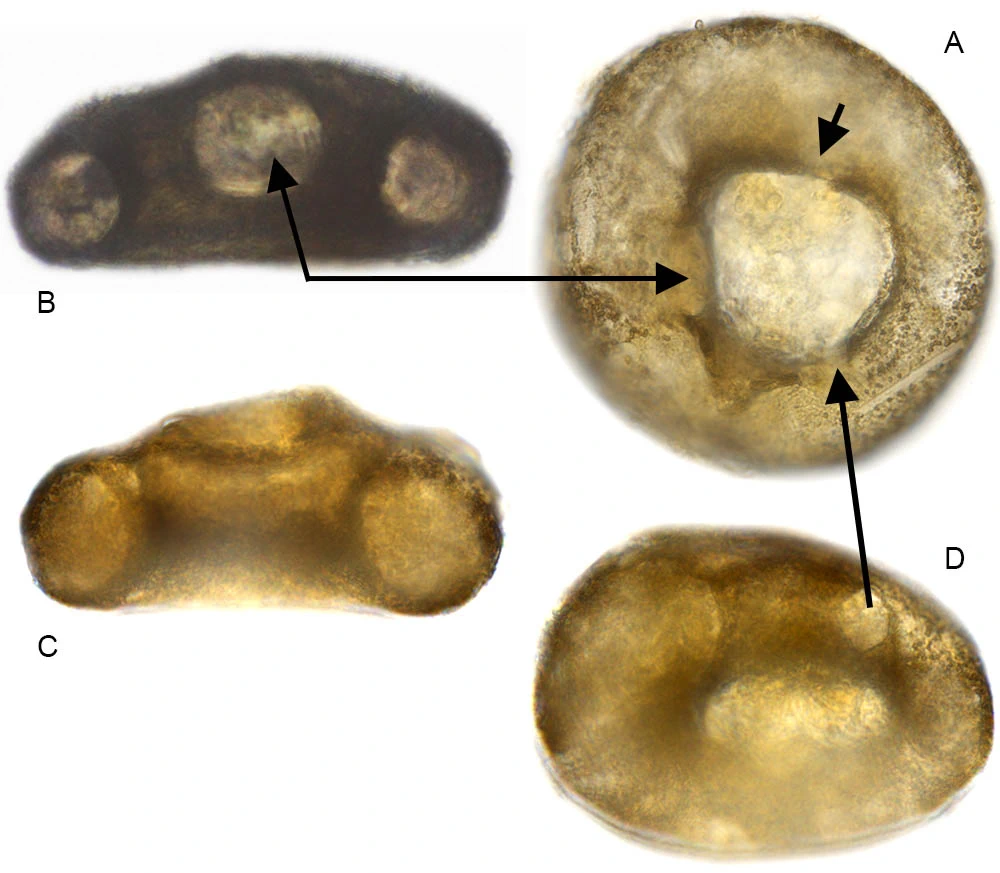
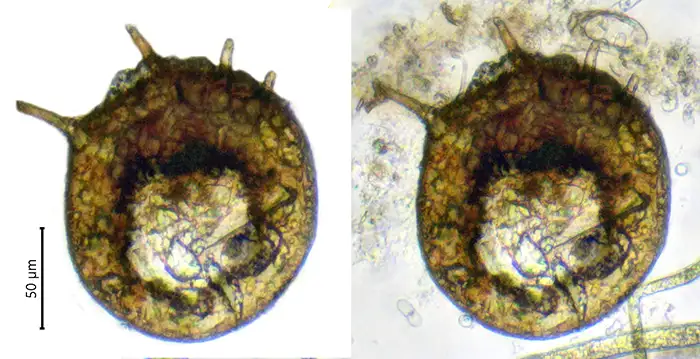
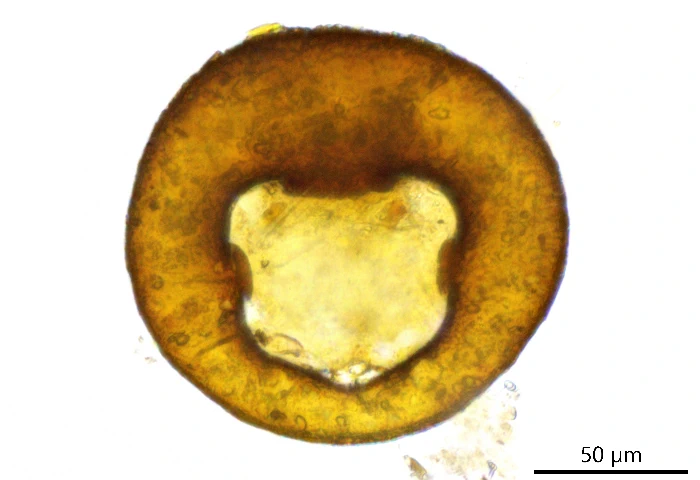
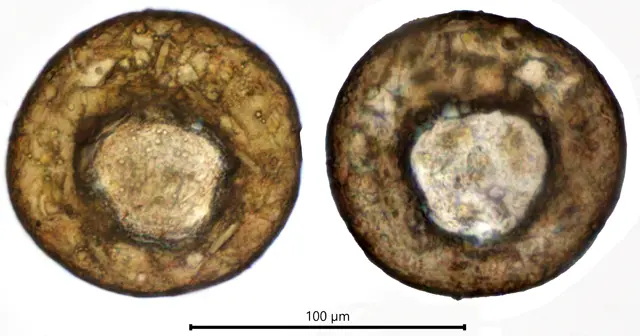
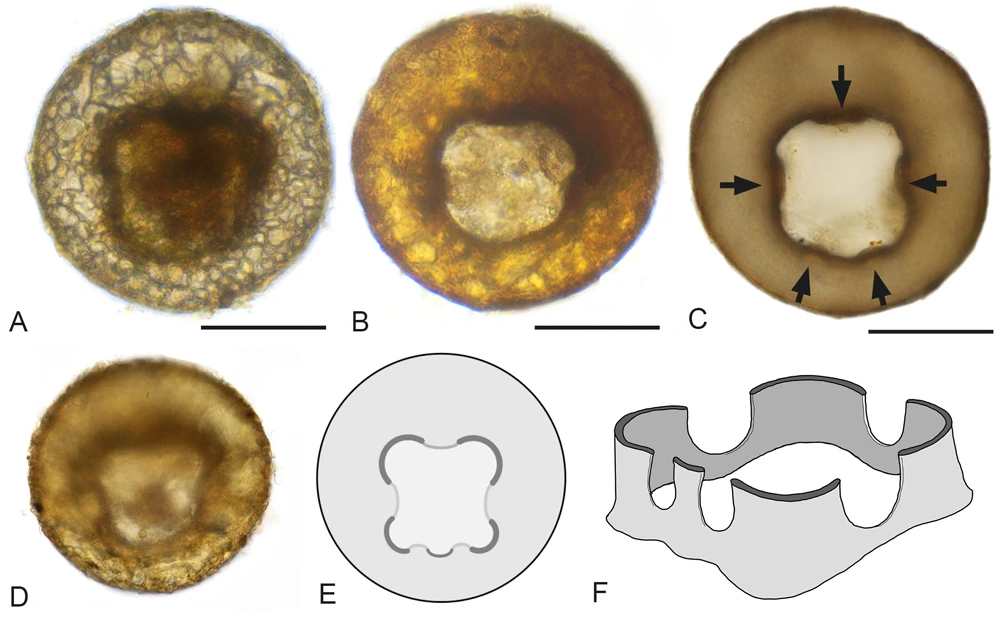
Improved diagnosis (Łuców et al., 2024): In dorsal view, the shell is almost round with an eccentrically located pseudostome. The aperture is shaped like an almost square trapezium with rounded corners, with the base near the center of the shell and the apex near the frontal side. From the edge of the aperture, four or five internal extensions originate, leaving elliptical openings between them. These extensions reach the dorsal inner part of the shell in which they are incorporated and are crescent-shaped in dorsal view. The shell is slightly or more densely covered with xenosomes; spines are rare.
Dimensions: Grospietsch (1954): Shell diameter about 125 µm, height 45-48 µm, apertural diam. 48-58 µm, H/D 0.36-0.39.
Dutch populations: Shell diam. 94-164 µm, average 143 µm, height 60-63 µm, aperture: smallest diam. 43-65 µm, widest diam. 59-78 µm (n=21).
Mongolian population: Shell diam. 110-148 µm, average 126 µm, aperture: 48-60 µm (n=9).
Todorov and Bankov (2019): Shell diam. 122-154 µm, average 138 µm, aperture: 50-83 µm (n=33).
Ecology: Freshwater and mosses, Sphagnum.
Geographical distribution: The type species was originally described by Grospietsch (1954) from mosses in Swedish Lapland, hence the name lapponica. I found shells in sediment from a lake (Gooimeer, 2025), a small pond (Loosdrecht, 2020), and a ditch (Kamerik, 2025), and in Sphagnum on soil (Cruysbergen, Bussum, 2025), all in the Netherlands. Additionally, I found shells in material from Nuuk, Greenland (sampled by Maria Holzmann in 2022), a Mongolian fen (Łuców et al., 2024), a peatbog in Ireland (2025) and Lake Ällhölen in Southern Sweden (2025). This species was also recorded by Todorov and Bankov (2019) in their An Atlas of Sphagnum-Dwelling Testate Amoebae in Bulgaria, where it was labeled as C. ecornis.
Remarks: The type species was only found in one sample that originated from moss cushions in a small quarried bog near Abisko, Swedish Lapland. It was not uncommon there (Grospietsch, 1954). The original description is rather short and Grospietsch doesn’t mention the inner structure, which is only visible in his drawing. The shell resembles C. gasparella, but the aperture is much wider, without the typical key-hole shape.